
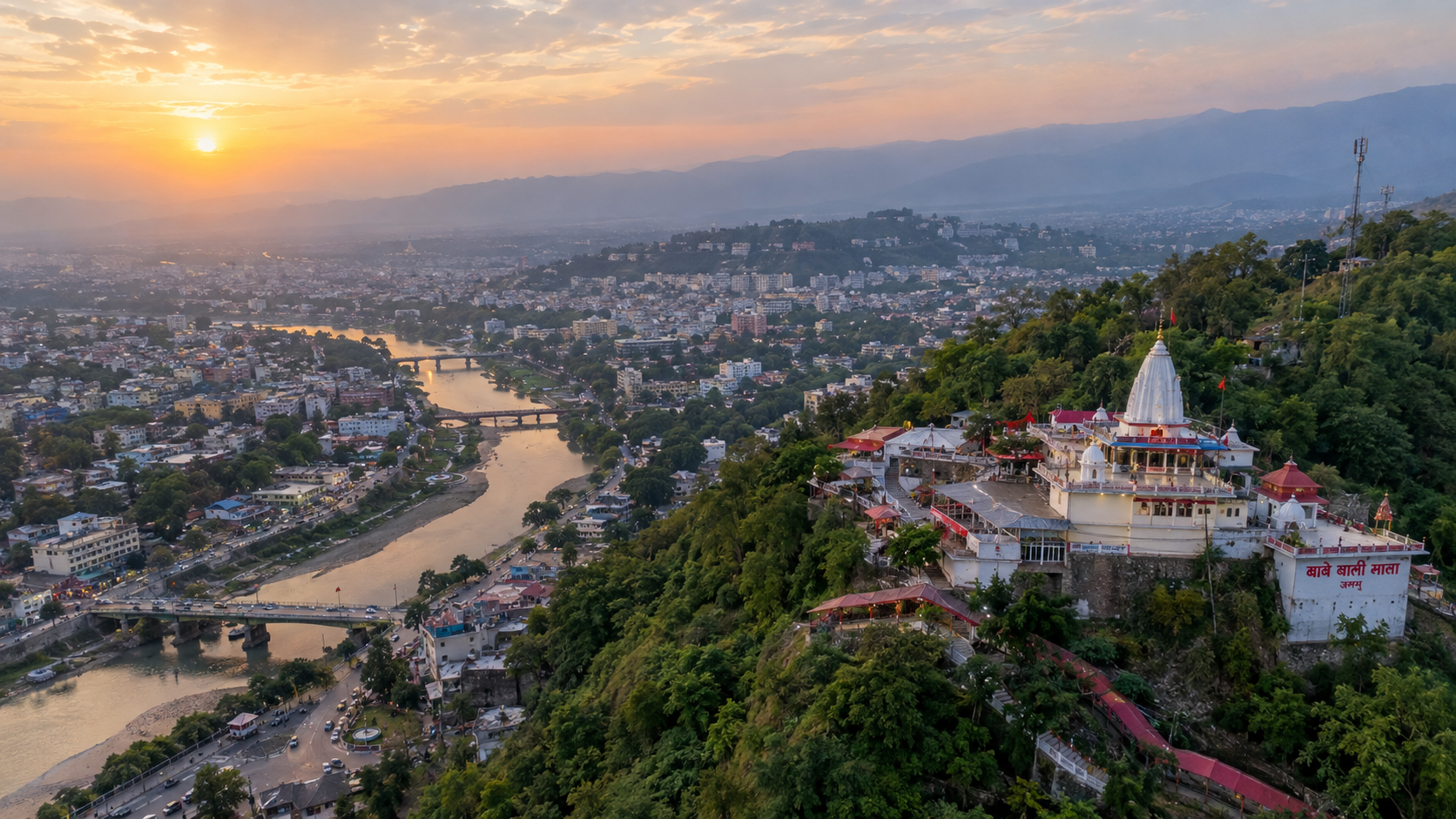
Jammu
Bawa Wali Mata & Jammu City Walk
Temple bells, Gondola views, Aquarium, Bagh-e-Bahu, Hari Niwas Palace and Manda.
Location
Jammu City, Jammu & Kashmir
Classification
Heritage & City Walk
Ideal duration
Half day to 1 day
Overview
The soul of the City of Temples
Jammu City Walk journeys through the heritage, spirituality, royal history, culture, and scenic beauty of Jammu, the winter capital of Jammu & Kashmir. Along the Tawi River, Jammu is known as the City of Temples and gateway to major pilgrimage and tourist destinations.
The walk connects Dogra legacy, ancient temples, palaces, markets, and modern attractions: Mubarak Mandi, Hari Niwas, Raghunath Bazaar and Temple, Bahu Fort, Bawe Wali Mata, Bagh-e-Bahu, Ropeway, and Tawi Riverfront. It is made for history lovers, spiritual travellers, photographers, or visitors en route to Vaishno Devi.
History
Jammu has more than a millennium of cultural, trade, and spiritual history. Its golden period under Dogra rulers produced palaces, temples, forts, and civic buildings. Mubarak Mandi, their royal residence, combines Rajasthani, Mughal, European, and Dogra architecture.
The 19th-century Raghunath Temple and historic Bahu Fort and Bawe Wali Mata Temple reflect the city's enduring spiritual and historical importance. Jammu evolved from royal capital to modern city while retaining traditions, festivals, and cultural identity.
Recommended route
Walk the heritage trail
1. Mubarak Mandi Heritage Complex
Panjtirthi · 1–1.5 hours. Dogra Maharajas' former official residence, with courtyards, halls, temples, museums, historic architecture, and city views.
2. Hari Niwas Palace
Palace Road · 30–45 minutes. Dogra royal heritage near Tawi River, with royal architecture and scenic surroundings.
3. Raghunath Bazaar
45 minutes–1 hour. A historic market for dry fruits, Kashmiri handicrafts, woollens, jewellery, spices, religious souvenirs, street food, and old-city atmosphere.
4. Raghunath Temple
45 minutes. Dogra-built shrine complex with Lord Rama shrine, gold-plated interiors, ancient scriptures, architecture, and a peaceful spiritual atmosphere.
5. Bahu Fort
Bahu Fort Road · 1 hour. Ancient hilltop fort overlooking Tawi River, with city views and Bawe Wali Mata Temple.
6. Bawe Wali Mata Temple
Inside Bahu Fort · 30 minutes. Respected Goddess Kali temple with traditional rituals and thousands of year-round devotees.
7. Bagh-e-Bahu
Bahu Fort Road · 1 hour. Terraced gardens, fountains, city views, family walks, evening ambience, and photography.
8. Jammu Ropeway
Bahu Fort–Mahamaya Temple route · 30–45 minutes. Aerial Tawi River, Bahu Fort, hill, and city views.
9. Tawi Riverfront Aarti & Walk
Evening. A peaceful riverfront for walks, relaxation, cultural atmosphere, and sunset photographs.
Things to do
Explore royal heritage · Visit ancient temples · Walk traditional markets · Enjoy Dogra cuisine · Take Bahu Fort evening views · Ride the ropeway · Experience Tawi Riverfront · Shop handicrafts · Photograph heritage and city landscapes.
Best time to visit
October–March: best walking season, pleasant weather, ideal sightseeing and photography. April–June: good in mornings/evenings; afternoons can be warm. July–September: green surroundings with occasional rain.
Suggested travel plan
Half day: Morning — Mubarak Mandi, Hari Niwas, Raghunath Bazaar & Temple. Evening — Bahu Fort, Bawe Wali Mata, Bagh-e-Bahu, Tawi Riverfront.
Full day: 9:00 Mubarak Mandi · 11:00 Hari Niwas · 12:00 Bazaar & Temple · 2:00 Dogra lunch · 3:30 Bahu Fort & Mata · 5:00 Ropeway · 6:00 Riverfront walk.
By air
Jammu Airport, approximately 7–8 km from city centre; taxis are available.
By train
Jammu Tawi connects with Delhi, Chandigarh, Amritsar, Mumbai, Kolkata, and other cities.
By road
Well connected with Delhi, Chandigarh, Amritsar, Srinagar, Katra, and Patnitop by buses, taxis, and private vehicles.
Facilities & travel services
Hotels, budget stays, restaurants, markets, parking, information centres, local taxis, auto-rickshaws, medical facilities, and guided heritage tours. Available services: airport and rail pickup/drop, heritage walk, Mubarak Mandi, Raghunath Temple, Bahu Fort, Bagh-e-Bahu, local sightseeing, Patnitop, Shiv Khori, Vaishno Devi, and custom Jammu packages.
Food & photography
Try Rajma Chawal, Kaladi Kulcha, Khatta Meat, Dogra Thali, Ambal, Patisa, Gol Gappe, Lassi, and traditional sweets. Photograph Mubarak Mandi, Bazaar streets, Bahu Fort viewpoint, Tawi sunset, Ropeway, and temple architecture in early morning/evening; avoid restricted temple areas.
Frequently asked questions
How much time is required?
Half a day covers the major stops; a full day is a more relaxed exploration.
Is it suitable for families?
Yes, including families, senior citizens, photographers, and heritage lovers.
Can it be combined with Vaishno Devi?
Yes. Many travellers explore Jammu before heading to Katra.
Best starting point?
Mubarak Mandi Heritage Complex, for the clearest introduction to Jammu's royal history.
Quick facts: Jammu City · Jammu district · Heritage & City Walk · Dogra heritage, temples, palaces, markets, and Tawi views · half day–1 day · best October–March · Jammu Airport and Jammu Tawi Railway Station.
Why visit Jammu City Walk?
This is more than sightseeing: a journey through history, devotion, and culture. Royal Mubarak Mandi and Hari Niwas, Raghunath and Bawe Wali Mata temples, markets, viewpoints, local food, and the Tawi River together introduce the heart and soul of Dogra land.